By Denise Barajas, MD, FACS, Medical Director, Center for Cancer Care and Hewitt Center for Breast Wellness at Griffin Hospital
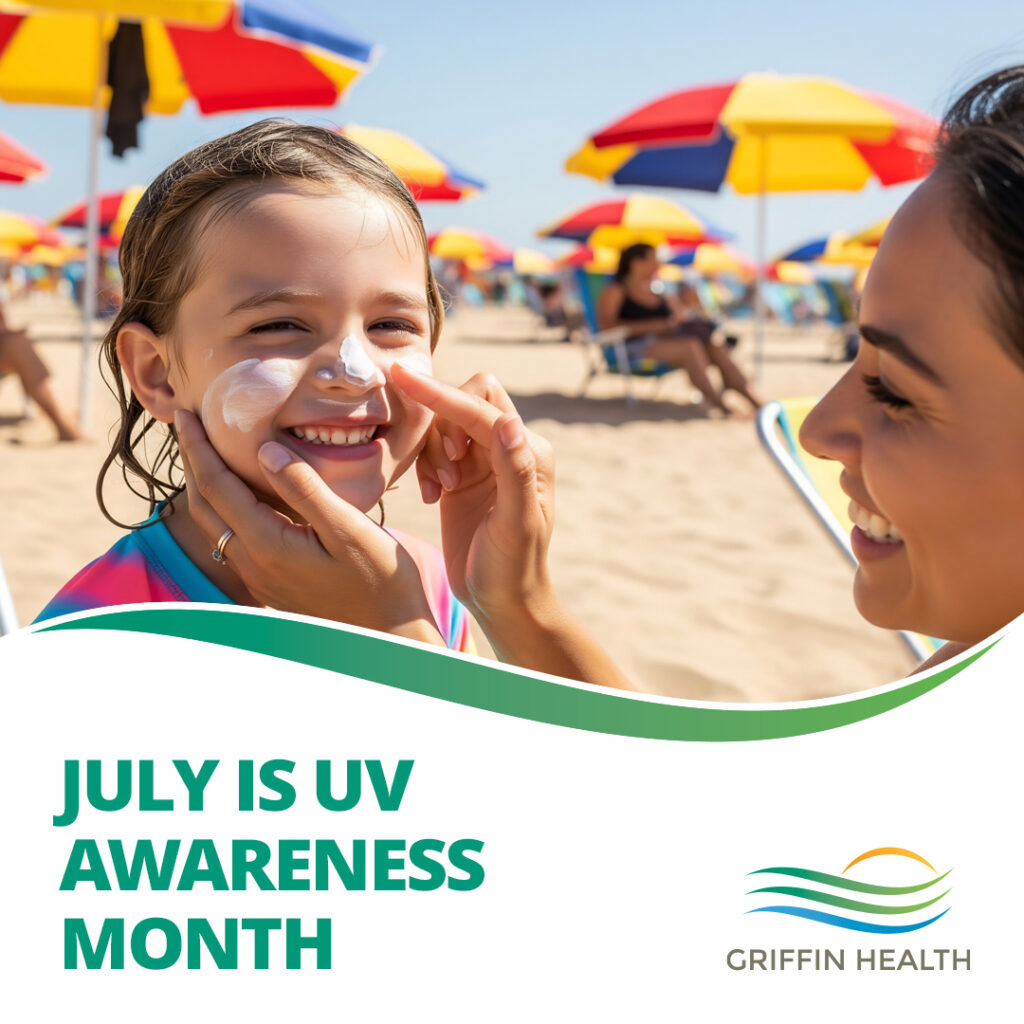
July is Ultraviolet (UV) Safety Awareness Month, reminding all of us that UV exposure is a major, preventable cause of cancer.
UV rays from the sun and artificial sources like tanning beds and nail lamps are responsible for most skin cancers, including basal cell carcinoma, squamous cell carcinoma, and melanoma. They are also linked to Merkel cell carcinoma, lip cancer, and eye damage. According to the American Cancer Society, skin cancer is the most common of all cancers. Melanoma, the most serious type of skin cancer, account for more than 110,000 cases of skin cancer and more than 8,000 cancer deaths annually.
In addition to unprotected and/or excessive exposure to UV radiation, risk factors for non-melanoma and melanoma skin cancers include:
- Pale skin (easily sunburned, doesn’t tan much or at all, natural red or blond hair)
- Occupational exposures to coal tar, pitch, creosote, arsenic compounds, or radium
- You or other members of your family have had skin cancers
- Multiple or unusual moles
- Severe sunburns in the past
Simple preventive steps can make a big difference:
- Use SPF 30+ sunscreen
- Limit sun exposure from 10 a.m. to 4 p.m. when the sun is its strongest
- Wear hats and UV-protective sunglasses
- Seek shade during peak sun hours
- Avoid tanning beds
Skin cancer can be found and treated early by looking for these symptoms:
- Any change on your skin, especially in the size or color of a mole, growth, or spot, or a new growth (even if it has no color)
- Scaliness, oozing, bleeding, or a change in the way a bump or nodule looks
- The spread of pigmentation (color) beyond its border, such as dark coloring that spreads past the edge of a mole or mark
- A change in sensation, such as itchiness, tenderness, or pain
Some symptoms are not as noticeable, so skin cancer screenings are advised. If you have any of these symptoms, call your primary care physician immediately or visit griffinhealth.org to find a local dermatologist.
At the Center for Cancer Care at Griffin Hospital, we are committed to prevention, early detection, and education. Protecting your skin and eyes today can reduce your cancer risk tomorrow.